| |||||
| |||||




An Introduction to the Editor & Sommelier Selects
 Gilberto J. Bojaca, wine educator and certified sommelier, is well recognized in the hospitalityand wine service industry. He was co-founder and past president of CAPS (CanadianAssociation of Professional Sommeliers) and a member of the Society of Wine Educators. He was also founding member & past president of Sommelier Guild of Canada. . He is now spearheading Sommeliers Selects with the assistance of the publisher Michael Vaughan. To see Gilberto's background. To contact Gilberto: gilberto@sommelierselects.com

* * *
Making the Customer Count
A Sommelier’s Survivor Guide
By Michael Vaughan
More and more, I am able to understand the trials and tribulations of being a sommelier. There are a host of conflicting pressures imposed on this position. What is the primary purpose of the sommelier? On the serving customer-side, there are a number of possible conflicting considerations:
1. To guide the customer to a wine that will make him/her happy from a taste/price point of view.
2. To make sure the wine is sound and is served at the appropriate temperature and in a wine glass that shows the wine at its best.
3. To inform the customer what works best with the item being served.
4. To make sure the wine list works and is profitable.
From some owner’s point of view, the latter is often the most important aspect. An managerial attitude of "let’s make money, what are we in business for?" can make life difficult for sommeliers.
In part, this money mantra helps explain why we see a host of private order and consignment wines on wine lists. It means that customer's do not know what a wine costs, which can encourage high mark-ups. For instance, some are reluctant to pour a tasty, well-priced Pinot Grigio from the LCBO list where the selling price is well known. It's sad but true that an unknown (and perhaps not as good) Pinot Grigio might be easier to sell with a higher mark-up. You should get these special wines because they deserve to be on the list, not simply to make money.
Some sommeliers have commented to me that not all customers are very wine savvy and tend to enjoy whatever is poured. I think that the answer is to become an educator and enlighten the customer. Giving the customer a small complimentary taste of a wine goes a long way. The ipad with its ability to provide customers with lots of details may be the way to go.
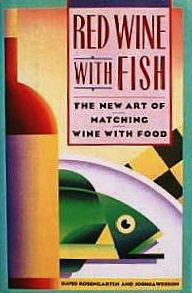 The bottom line is that the customer matters. Understanding customer preferences for contrasting or complimentary flavours is absolutely critical. This is not a matter of right or wrong, but a matter of personal taste. Make sure that you have not missed reading the indispensable1989 book Red Wine with Fish: The New Art of Matching Wine with Food by David Rosengarten and Joshua Wesson. I used it in my classes for sommeliers but, unfortunately, it is now out of print. For under $10 you will be able to track down a used copy.
Of course, sommeliers are confronted by a tremendous diversity of tastes and preferences. For instance, most sommeliers know that the tannins in certain red wine (i.e. Bordeaux) and the fatty acids in specific fish create a bitter and possibly unpleasant taste sensations.
Of course, sommeliers can't taste verything and have to rely on reviews/recommendations of wine writers. Getting honest, relevant and useful reviews will help you develop your wine list. The leadig sources are Robert Parker, Jancis Robinson, the Wine Spectator, etc. - all well-known, especially by your customers.
Getting a recommendations from someone whose palate you know and understand is critical. Of course, everybody has an agenda. This varies from personal taste (which is quite ok) to being a paid-for promoter. In reality, you can do the latter without selling out. Toronto-based John Szabo MS is a good example of an honourable knowledgeable critic who says it the way it is. Beware of the vanity pieces of hucksters, label worshippers and wannabes whose reviews are influenced by samples, dinner invitations, payments and/or free trips.
As for my reviews, sommeliers can get the lowdown on each Vintages release and are invited to use the biweekly Vintage Assessments Shoppers Release Summary
Customers are becoming increasingly savy. Here is an outstanding article which appeared in the Wall Street Journal two years ago: 10 Ways to Save Money Ordering - Avoid the Chardonnay tax, and other insider tactics for not overpaying at restaurants by Dorothy J. Gaiter and John Brecher (I suggest that you download a copy of this feature for reference - click here to see )
Here is the 2009 WSJ article written by Gaiter & Brecher:
These days, anyone who goes out to eat -- and certainly anyone who orders wine at a restaurant – is looking for value.
Here are 10 tips that will help you find value in wine at restaurants. Obviously, there are many exceptions to every one of these suggestions, but if we were going to give some overall advice geared to the moment, this would be it.
1. Skip wine by the glass. Restaurateurs like to make enough on a single glass to pay for a whole bottle, which is great for them but not so great for you. And it wouldn't besot bad except that so many wines by the glass are poured from bottles that have been open for too long and mistreated after opening. At a trendy Asian restaurant in Manhattan, we recently ordered a New Zealand Pioneer by the glass for $12 that was served so warm it could have been our after-dinner tea. Instead of wine by the glass, think about having a half bottle. Also consider that most states now have "wine doggie bag" laws that allow you to take home-unfinished bottles. (Obviously, wine bars that specialize in wines by the glass, and keep them well, are a major exception.)
2. Check the vintage closely. We're not talking hereabout ordering a 2004 Barolo from the list and getting a 2002, which is a problem but not at the forefront of concern for most of us today. Instead, here's the issue: Most wines are meant to drink young and fresh and many restaurants, especially informal restaurants, don't keep their wines in perfect conditions. Our guesses that many restaurants these days, facing slumping demand, are in no hurry to replenish their inventory of wines with more recent vintages. That means wines that should have been drunk a while back are still being served. Whether you are ordering a pleasant Italian red or a Sauvignon Blanc from New Zealand, make sure the wine is from a very recent vintage. (If the wine list says that the wine is, say, 2007 and you get the 2006, tell the waiter you really would like the 2007.)
3. Bypass the second-cheapest wine on the list. Restaurateurs know that diners don't want to appear cheap by ordering the least expensive wine on the list, so they'll hose you for ordering the second cheapest. The least expensive is actually a pretty good deal at many places.
4. Scope out the owner's passion for value. If there are, say, a dozen wines from South Africa on the list and no more than a handful from anywhere else, chances are the owner knows and cares about South African wine -- and therefore is more likely to know good values from there. While we are big fans of Chilean wines for their taste and value, we have seen far too many lists recently with just one Chilean wine on the list and it's usually inexpensive. It's clearly there’s a "value wine," but our guess is that the owner doesn't know anything about Chilean wine and therefore honestly has no idea if this particular wine is a good value or not. And all of this relates to food passions, too: At a restaurant where the owner's passion is fish, we wouldn't usually expect to find great value in American Cabernet Sauvignon.
5. Avoid the Chardonnay tax. Chardonnay is America's favorite wine. Just about everybody loves it and feels comfortable with it, which is why the Chardonnays on so many lists are grossly overpriced compared to other wines. You are generally going to do far better with less-popular wines such as Riesling or Austria's Grüner-Veltliner. At the same trendy Manhattan spot, we ordered a bottle of the cheapest wine on the list -- a 2007 Jekel Riesling from California for $34 -- and it was outstanding. At another restaurant recently, we had an excellent bottle of Domäne Wachau Grüner-Veltliner for $22. On the same list, Beringer White Zinfandel was $20.
6. Never order Santa Margherita Pinot Grigio. We don't mean to pick on Santa Margherita. We know many people like it and that's fine. But because so many people like it, it is routinely one of the most outrageously priced wines on the list. We note it here only as a classic example of this: If you stay within your comfort zone, ordering only wines you already know, you will be punished for it, price-wise. In addition, no wine is going to seem like a good value to you when you know you could buy it at a local storefor half the price or less. That's why it's so important to focus on labels or kinds of wines that you wouldn't otherwise see. At the same restaurant where we had that outstanding Grüner for $22, Santa Margherita was $45. And we've seen it on other lists for $55. Remember: There is value in tasting something new.
7. Don't ignore house wines, by the bottle or in carafes. People who travel around the world often tell us they wish more American restaurants offered the simple, inexpensive and delightful wines that seem ubiquitous in Europe and elsewhere. We agree. But we do think we are seeing a slight up-tick in the number of restaurants in America offering house wines -- especially at informal places -- and, more often than not, we have found these lusty and fun.
8. Look for half-price deals. If you missed the Wine Events recently listing a few of the restaurants offering, say, 50% off every bottle on Mondays, drop us a note and we’ll send it along. But that listing was just the tip of the iceberg. This trend is sweeping the nation. Look around and you are likely to find a deal like that in your neighborhood. Some places are even offering half price deals by region -- say, 50% off French wines one week and Italian another week.
9. BYOB. Check around for restaurants that allow you to bring your own wine. And if there is restaurant you know well, ask if you could bring your own wine and pay corkage. Remember that the point here isn't just to save money, but to have wines that the restaurant doesn't offer or that you might otherwise postpone opening. More restaurants than ever, eager for business, are relaxing their rules on BYOB and lowering corkage fees. Even some fancy places now are offering special BYOB nights.
10. Have it your way. No wine, at any price, is a good value if you don't enjoy it. Restaurants, now more than ever, are eager for you to have a good experience so you will come back. Don't be shy. If you think there’d wine is too warm, ask for an ice bucket. If you want the waiters to stop pouring so much into your glass, tell them -- nicely, of course. We are all in this economic mess together and everyone understands --or should understand -- that a night out these days needs to be relaxing and personal.
Sure, there are many other ways to find value on a list, but we have tried to focus here on simple stuff and things we actually do ourselves. If you are willing to put some more work into this, one idea we'd suggest is checking before you dine to see if a restaurant's wine list is online. This will give you more time to study the list to find good values. And while personally we wouldn't do it, we know there are people out there who enjoy bargaining and we'd guess that at least some restaurants would be willing to dicker on the price of more-expensive wines these days. Finally, we understand that there are some restaurants where it’s simply impossible to get good value because the prices of their wines are uniformly ridiculous; those restaurants do not deserve your business. Just remember that, in good times and bad, wine always tastes better when it's a good deal.
This feature inspired a follow up article in the American Association of Wine Economists found that America’s most popular white - Santa Margherita Pinot Grigio, which they say is vastly overpriced. And yet, many people order it and love it – everyday. Here is the article:
The Santa Margherita Syndrome
Published April 12, 2009
by Mike Veseth (University of Puget Sound and The Wine Economist)
Many articles have appeared recently advising wine consumers on “trading down” strategies for the recession —where to find the best values and bargains as the market slump continues.
One of the best pieces I’ve read comes from Dorothy J. Gaiter and John Brecher at the Wall Street Journal: 10 ways to save money ordering wine at restaurants. All their advice is timely, but rule #6 really caught my eye:
6. Never order Santa Margherita Pinot Grigio. We don’t mean to pick on Santa Margherita. We know many people like it and that’s fine. But because so many people like it, it is routinely one of the most outrageously priced wines on the list.
Nothing personal, Dottie and John said, it’s just supply and demand plus a certain bandwagon effect that seems to afflict wine drinkers when confronted with a complicated and uncertain set of choices. We note it here only as a classic example of this: If you stay within your comfort zone, ordering only wines you already know, you will be punished for it, price-wise. In addition, no wine is going to seem like a good value to you when you know you could buy it at a local store for half the price or less. That’s why it’s so important to focus on labels or kinds of wines that you wouldn’t otherwise see. …
Remember: There is value in tasting something new.
Sensible advice, although not always easy advice to follow in practice given the high cost of restaurant wine. Everyone wants to find that delightful unexpected bargain, but no one really likes paying the bill for a wine experiment that disappoints. So restaurants and wine consumers alike seem to find themselves drawn to a small set of “usual suspects.”
Demand and Supply
Wine & Spirits magazine surveys restaurants each year to try to discover trends both in general and in specific segments of the market. This year’s poll (see the April 2009 issue) provides early data on how the recession is affecting wine sales and some of the strategies that restaurants are trying to deal with this increasingly serious problem.
W&S provides a lot of information about what successful restaurants are doing to cope with the weak economy. One unexpected implication of the survey seems to be this: Always try to sell customers Santa Margherita Pinto Grigio.
The W&S editors do not advise this, of course (they are very careful in this regard - they just report the findings); it just seems to be restaurant conventional wisdom. W&S asks restaurants to identify the wines that they offer by the bottle or serve by the glass and then publishes the names of the most-reported products. The most listed wine-by-the-glass, for example, is Sonoma-Cutrer Russian River Chardonnay (11.1 responses per 100 restaurant replies), which sold for an average price of $12.67 per glass in 2008.
Santa Margherita Pinot Grigio was #6 on the list (number six again … spooky), reported by 6.7 per 100 restaurants. It sold for an average price of $14.40 per glass in 2008. A quick internet search reveals that Santa Margherita often sells for around $20 per bottle retail, which suggests a wholesale price of $14-$15 — suspiciously close to the $14.40 average per glass tariff. You can begin to see why it would be a popular restaurant choice. And why Dottie and John’s number one rule is …
1. Skip wine by the glass. Restaurateurs like to make enough on a single glass to pay for a whole bottle, which is great for them but not so great for you.
W&S lists Santa Margherita as the number one wine in both the Pinot Gris/Pinot Grigio and the Italian wine categories. The average per bottle restaurant price was $52, which indicates a somewhat higher mark up over wholesale than the usual restaurant rule of thumb. All of which makes me think that wine consumers need to become a bit better educated about wine economics because it is pretty plain that restaurants have been hitting the books on how to use demand and supply to preserve profit in these unsettled economic times.
What Should I Order?
So where are the values on restaurant wine lists? The simple answer is that there is no simple answer (apart from Dottie and John’s good advice). The W&S poll asked restaurants to list wines under $25 per bottle and the most frequent response was Cooperidge White Zin and Chardonnay, $24 average price. Cooperidge is a Gallo restaurant brand. Interestingly, it appeared in just 1.9 per 100 responses. The number two and three bargain wines were both Ste Michelle Wine Estate products from Washington State - Chateau Ste Michelle Riesling ($24 / 0.7 responses per 100) and 14 Hands Columbia Valley Cabernet Sauvignon ($21.50 / 0.7 responses per 100).
No very strong conclusions can be drawn from this data but they do suggest that (1) there is no one wine or brand that restaurants consistently go to for the value-seeking customers, so you will have to explore the wine list carefully to find what you are looking for, but (2) it might be smart to include Washington State wines in your treasure hunt.
Overpriced Wines?
Let me conclude by mentioning Gord Stimmell’s note to Amy Pataki's review of e11even in the Toronto Star on January 28, 2011. Gord’s Stiff Pour says:
When I first saw a red wine for $80 a glass on the e11even wine menu, I nearly fell off my tasting stool.
Yes, “06 Bouchard Pere & Fils, LEnfant de Jesus, Burgundy $80” topped an esteemed list of 33 wines available by the 5-ounce pour. I tasted this Beaune red when Vintages released it in July, 2009 at $99.95 a bottle.
Even today, 45 bottles linger in a few stores, never a good sign.
I awarded it 88 points, not a great score, especially for a $100 wine.
You do the math: 750 millilitres contains five glasses, so thats $400 for the bottle. Sweet Baby Jesus indeed. e11even uses the trendy Enomatic inert gas preservation system, but I worry how quickly a bottle will be consumed. These systems brag they keep wine fresh for a month after opening, but in my experience, the fruit still begins to dumb down after a few days.
That said, I applaud the restaurant's growing selection of 500 or so wines (topped with an ʼ04 Penfold's Grange at $1,200 and a 1.5-litre 07 Romanée Conti La Tâche at $2,200).
And the table-side iPads used to dial into the cellar selection are total fun…
As long as it is poured from a fresh, virgin bottle.
Maybe I should order a Manhattan first.
Let me point out that no one forces the customer to frequent restaurants with overpriced wines. Also, because of the huge investment, some restaurants serving great cuisine with large extensive cellars all in an ultra luxury setting, such as Harbour Sixty, are entitled to higher mark-ups.
.More to come – your feedback is appreciated.
* * *
March 4 , 2011
Michael Vaughan Focuses on Price Change
Is $4,975 for a bottle of 2005 Petrus worth the risk?
Almost thirty-seves years ago in a Financial Post feature entitled “Some vintages are worth their weight in gold”, I expressed my astonishment with ever-spiraling world wine prices. One year later in 1974 the market crashed. At the time, Bordeaux was the center of t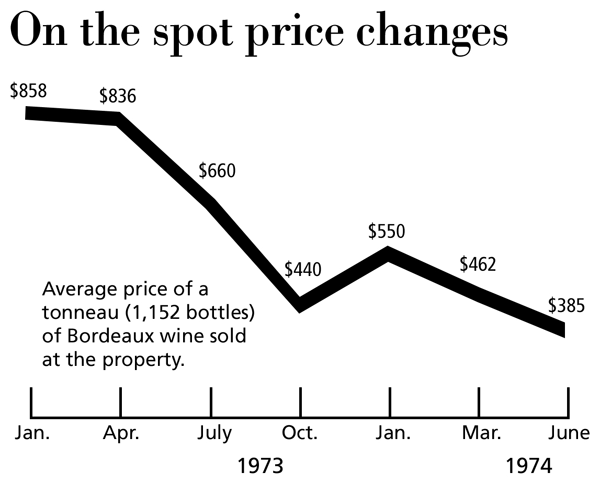 he universe. Speculation, scandal and the rather dismal 1972 vintage, followed by the enormous but mediocre 1973 harvest resulted in the average spot price per Bordeaux tonneau (1,152 bottles) collapsing from $858 to $385 or from 78¢ to only 33¢ a bottle, amazing by today’s standards.
Even fine collectors were not unscathed. The wildly overpriced 1972 first growths were being dumped along with the now much reduced ‘73s. At Chateaux Mouton Rothschild, for instance, 50 cases of 1972 were being given away free with each 100 case order of 1973. To see my original August 3, 1974 article in the Financial Post click here
As two-thirds of all wine investment is concentrated in Bordeaux, the question today is whether this collapse can happen again. The answer: perhaps. The reason is that more than ever before, classic Bordeaux first growths are no longer being purchased by end-drinkers; they have pretty much become the exclusive domain of speculators. As blue chip investments, they have become hideously expensive. How many are aware that the average individual Canadian after-tax income will only buy you 6 bottles of 2005 Chateaux Petrus annually?
Of course, 2005 Petrus quoted at $4,975 US a bottle may be the extreme example; after all, a bottle of Chateau Latour will only set you back $1,110 (at current US prices). While some of these wines may be drunk, the vast majority is bought as a “status” investment symbol. Certainly one has to wonder whether the thousands of cases squirreled away at these heady prices can continue their upward spiral.
 Is the 100-point Chateau Petrus worth the price? As a trained economist, I can say on one hand no, at least not for me personally; and, on the other hand, yes at least in terms of supply and demand. One has to keep in mind that the latter relates to wine as an investment commodity, not as something you would necessarily drink.
A glance at current Wine Spectator scores, however, tends to confuse. There are three 100-point wines from the 2005 vintage coming from the Pomerol region: Petrus at $4,975, Chateau Lafleur at $2,000 and Chateau L’Evangile at $260 a bottle. Why would any imbiber choose to buy Petrus when they can get 19-bottles of the identical-rated L’Evangile?

In fact, why not buy the 95-point Chateau Providence, also from Pomerol, which will set you back a mere $93. So is it one Petus or 53 bottles of Providence? For selling purposes, we all know Petrus; but who knows Providence? That may not matter as Petrus has now become so expensive that there may no longer be much of an upside. The huge gains of the past may be exactly that – past. A bottle of ’82 Petrus, which cost about $300 upon release, today fetches $4,500 – a 15-fold increase over 25 years. In 2003, that ’82 Petrus was only $2,460 US, which sounds cheap by today’s prices. Of course, that was in US dollars and the exchange was $1.49 Canadian, which translates to $3665 CAN – great for Canadian sellers.
Here is Parker’s 2005 Petrus profile: The uncontested star of Pomerol, there are 2,400 cases of the 2005 Petrus, which appears to be the finest wine made at this estate since the 1998 ... and that's saying something. It boasts an inky/blue/ruby/purple color along with an extraordinary bouquet of sweet mulberries, black cherries, cassis, vanillin, and spice box. While powerful and full-bodied with high tannin, it displays no aggressiveness or austerity. This massive, rich, super-intense Pomerol will be at its finest between 2018-2050. It is another brilliant achievement for Christian and Jean-Francois Moueix. (Robert Parker - Wine Advocate - Apr-2007) • Drink: 2018-2050 • Parker Score: 98-100/100 • Jancis Score: 18.5/20 • Wine Spectator Score: 100/100
Of course, there’s the rub for Canadian collector-investors. How do Canadians realize their windfall gains? There are very few auctions here. The only one organized annually in Ontario is by the LCBO via Ritchies (now gone). It has significant fees/taxes than can bump the price of acquisition up by almost a third.
I called ex-Torontonian Peter D. Meltzer, author of Keys to the Cellar: Strategies and Secrets of Wine Collecting and Wine Spectator commentator. He said that if you have stuff to sell, the US auction market is still on fire. In 2007 sales were up 23% totaling $210 million out of a $300 million global market. The leading US house was Acker Merral & Condit with $59 million in sales. Its meteoric rise is attributable to the fact that it doesn’t levy a consignor’s fee. With the softening US dollar, this may not be as attractive as in the past. For selling prices, check out www.wine-searcher.com
I am afraid to say that there is now (Spring 2011) another resurgence of prices, mainly due to Chinese investors. Unfortunately, price-quality ratios no longer have much meaning. Labels have become an investment and we, the real wine lovers, are no longer able to access the great wines without having to shell out enormous amounts of money (thanks to heavy handed investors and status seekers). Ironically, there are always great finds out there. It's just a matter of tracking them down before the speculators do!
* * * * *
February 18 , 2011
February 19 Vintages Reviews
Sommelier Robert Miller
rmillerwines@gmail.com
07 Kumeu River Mate's Vineyard Chardonnay
medium straw with yellow highlights, intense aromatics of key lime, grapefruit, pineapple, toast and nuts, medium-full bodied, with firm acidity, and quite a lengthy finish, and quite an enjoyable wine
***/***+ 93 pts
09 Spy Valley Sauvignon Blanc
very light straw colour, classic gooseberry nose, with passionfruit, asparagus, and light smoky notes underneath, medium bodied with crisp, refreshing acidity and a grapefruit skin taste persisting on the finish, well done
*** 90 pts
08 13th Street Gamay Noir
Medium ruby in colour, complex nose of violets, beetroot, smoked meat and dark cherries, medium-full bodied, dry, dusty tannins, cherries lingering on finish. Not for everyone - a bit esoteric but rewarding in its own right.
**+/*** 89 pts
08 Rosehall Run Cuvee County Pinot Noir
pale ruby, light and elegant nose of fresh cherries, cranberry, and fresh flowers, light-medium bodied, with crisp acidity, entry level Pinot Noir that won't win any converts with its elegance but is a nice glass of wine nonetheless
*+/** 87 pts
07 Wayne Gretzky No. 99 Estate Series Cabernet Merlot
Dark ruby with purple highlights, vanilla, blackberry, sandalwood, and a hint of red pepper on the nose, medium full bodied, well balanced with a solid (if somewhat tight) core of fruit on the palate, and a lasting vanilla and berry driven finish. I set out to dislike this wine my first encounter with it and have been won over each encounter I have had with said wine. Incredibly well done and at a remarkable price.
*** 90 pts
06 Jackson-Triggs Okanagan Estate Proprietors' Grand Reserve Shiraz
dense purple with ruby highlights, intense black fruit puree on the nose with cedar, vanilla and a light black pepper note, full bodied with ripe tannins and a good core of acidity, a long lingering fruit driven finish that ends with a spicy wood note, well made with a great sense of balance and a long life ahead of it.
*** 91 pts
07 Bonterra Syrah
deep purple with vanilla, plums, coffee, and juicy red fruits (raspberry/cherry) on the nose, medium plus bodied, dry, dusty tannins, somewhat of a short finish, but rewarding glass of wine nonetheless
**/**+ 88 pts
Candor Lot 2 Zinfandel
darker than dark, very intense purple, very intense nose of brambleberry, black cherry, ripe plum, full bodied with a solid core of sweet fruit on the palate as well as intense vanilla, and a dark chocolate tinged finish, this represents a good value for "zin"-fans and is a great introduction to the grape and its possibilities.
**+ 89 pts
07 Napanook (Dominus Estate)
deep purple, somewhat brooding nose of black fruits, cedar, tobacco, toast and graphite, medium-full bodied with similar flavour replays, a solid core of fruit with great structure (ripe tannins, tight acidity) with a lengthy finish of cedar and dried currants, a long way from drinkability and really, more Bordeaux than a lot of Bordeaux these days
*** 92 pts
07 Duckhorn Cabernet Sauvignon
medium purple, a fruit salad of black fruit, with toasty wood and dark chocolate aromas, all replayed on the palate, much as one would expect at this price from Napa, medium-full bodied, well balanced, with a toasty wood driven finish, not my style of wine, especially at this price, but others (I'm sure many) would disagree
*+/** 87 pts
08 Francis Coppola Diamond Collection Green Label Syrah-Shiraz
almost opaque, intense licorice, blackberries, black currant and mocha on the nose, full bodied with spicy fruit replays on the palate and a smoke driven finish, a very international style of the grape (more shiraz than syrah) with a somewhat tart uplift on the finish
*+/** 87 pts
09 Ironstone Cabernet Sauvignon
deep purple with ruby tinges, black raspberry, black currant and black tea on the nose, medium bodied with ripe plum and oak flavours coming through on the palate, very easy drinking (if somewhat lacklustre) style of cab for the masses
*+ 86 pts
07 Othello (Dominus Estate)
medium purple, TCA detected on nose and palate, black cherry, cedar and floral notes in small amounts, medium full bodied, limited fruit on palate (both closed and TCA marred), needs to be re-tasted
FAULTY
07 Ravenswood Barricia Zinfandel
dark ruby, spicy nose of pepper and freshly muddled berries, full bodied, with black raspberry and black cherry flavours leading to a vanilla/mocha persistent finish, quite an enjoyable glass, particularly if someone else is paying
**+ 89 pts
07 Shafer One Point Five Cabernet Sauvignon
deep purple, nose redolent of red and black currants, cedar mocha, vanilla pod, and over ripe plums, medium-full bodied, plum and cherry compote on the palate with a minerally finish, very well balanced and drinking quite well in its youth (as I'm sure it will be consumed by most 'collectors')
*** 92 pts
06 St. Francis Cabernet Sauvignon
deep purple with ruby highlights, still somewhat youthful nose of black fruit and spicy wood notes (caramel, vanilla pod and cedar) medium bodied with black cherry and plum flavours, very modern style of wine with fresh acidity and a lingering finish - only concern is the price
**/**+ 88 pts
08 Cloudline Pinot Noir
deep ruby in colour, nose consisting of blueberry, cranberry and delicate floral notes, medium bodied with crisp acidity and plenty of spicy, red fruit on the palate, crisp medium length finish, decent glass of wine, one to be drank if not discussed
*+/** 87 pts
06 Katnook Estate Cabernet Sauvignon
deep ruby with a tinge of brick at the rim, minty, black fruits, leather and dark chocolate on the nose, medium full bodied with well balanced acidity and ripe tannins, chocolate, plum and mint flavours dominating the palate through to the lengthy finish, well made and quite a delicious glass
*** 91 pts
06 Tait Basket Pressed Shiraz
dark ruby with purple highlights, black raspberry and black cherry dominated nose, with sandalwood and mocha notes, full bodied, intense concentration, solid core of fruit, somewhat 'hedonistic' with a long fruit and dark chocolate finish, quite seductive with a long life ahead of it (if somewhat pricey)
*** 90 pts
05 Yalumba The Signature Cabernet Sauvignon/Shiraz
dark ruby with purple highlights, intense black fruits, plum, vanilla, and mineral notes on the nose, full bodied with bold flavours on the palate - wood notes, mint, dark fruit and black licorice, great structure with a very long finish
*** 91 pts
08 Te Muna Pinot Noir
deep ruby, spicy raspberry notes with delicate floral hints, medium bodied, crisp acidity, dusty tannins, good structure, not an inexpensive bottle of wine but when is Pinot Noir?
**/**+ 88 pts
08 La Chamiza Polo Professional Reserve Malbec
dark purple, youthful, fruit driven nose, plenty of black fruits and blueberries, light floral notes with a touch of vanilla, medium bodied with drying tannins, spicy blackberry and blueberry flavours with an oak tinged (and somewhat short) finish, a quaffer
** 87 pts
08 Luigi Bosca Reserva Malbec
deep purple, smoke, black cherry, mocha/coffee and earthy nose, medium full bodied with ripe black fruits on the palate and a vanilla/mocha tinged finish, good value, crowd pleasing style of Malbec
*** 90 pts
08 Michel Torino Don David Reserve Cabernet Sauvignon
medium purple, dark fruit flavours with a hint of oak, one dimensional, medium bodied, similar flavours on the palate with plum notes dominating, somewhat acidic, with a medium length finish, is what it is for the price but not my cup of 'tea'
*/*+ 84 pts
08 Arboleda Cabernet Sauvignon
deep ruby, nose of red peppers, black plums and fresh herbs, medium full bodied with a mouthful of peppery, black fruits leading to a drying, tannic finish with hints of oak, austere overall, needs food of some sorts (hard cheese, red meats, anything ..) to drink
*+ 86 pts
08 Casa Silva Reserva Carmenere
as purple as purple gets, dark plums, black currants, and oaky/vanilla notes, with a touch of sulphur on the nose, medium bodied with freshly crushed berry flavours and a streak of minerality on the palate, picking up tobacco leaf on the finish
*+/** 87 pts
06 Concha Y Toro Don Melchor Cabernet Sauvignon
deep purple with ruby highlights, cedar black berries, leather and dark chocolate on the nose, medium full bodied, great structure (well balanced tannins and acidity), palate of heady fruit flavours and an oak driven, persistant, lengthy finish, quite a long life ahead of it
** 91pts
08 Terra Vega Cabernet Sauvignon Gran Reserva KPM
dark ruby with purple tinges, sandalwood, strawberry and black raspberry notes, medium bodied with black raspberry and cedar flavours, medium length
*+ 86 pts
08 Veramonte Reserva Pinot Noir
medium ruby, bright cherry, rhubarb and floral notes, medium bodied with cherry and raspberry replays on the palate, crisp, medium finish
*+ 86 pts
07 KWV Cathedral Cellars Triptych
deep ruby, wet band-aid, plums and an unnerving herbaceousness, medium bodied and slightly bitter with red fruits dominating the palate, and a cedary, dusty, tannic finish
*/*+ 85 pts
* * * * *
THE CONUNDRUM
Where are we going and what will we be drinking?
January 16, 2011
By: Gilberto Bojaca
Dear friends and colleagues,
I would like to take this opportunity to wish you and yours a happy, healthy and successful 2011. Hope you enjoyed the holiday season!
While reflecting on my past professional experiences and witnessing the continuous changes in the industry and our profession, I would like to share a few of my thoughts with you over the next few issues. I sincerely welcome and hope that you take some time to share your points of view as well in that spirit. Looking forward to hearing from you. Enjoy! Salud!
The Conundrum Part 1 - The Evolution of Wine
Wine, throughout history, has been associated with science, geology, philosophy, religion, art, gastronomy, business and politics. In the past, wine was predictable; country, region, grape variety, style, presentation and consumer preference. Today, wine is changing as rapidly as consumer preferences. Wine is evolving, and similar to its past, wine is expected to continue to evolve in the future. What this presents is a conundrum for consumers.
The evolution of wine can be attributed to a number of influences: region, terroir, climate (and climate change), the planets, style of winemaking, grape variety, music, literature, politics, media, marketing, the wine community, and the consumers’ own personal tastes, taste bud thresholds and buying trends. What makes wine so special is that it appeals to the mind as well as the senses; few beverages give us so many occasions to stop and think about what we're drinking. One curious enough to pause, research and reflect on the wine within their glass, will realize just how complex its history.
In the past, wines were categorized as “Old World”, from the traditional five wine producing countries: France, Italy, Germany, Spain, and Portugal. Over time, countries not previously considered as wine-producing countries, such as Chile, Argentina, Australia, California, surfaced and were categorized as ‘New World’. Soon, the wine industry spoke in terms of Old World vs. New World. Today, through continued evolution, there are ‘Old–Old World’ vs. ‘New-New World’ wines, wines of altitude, longitude, and latitude, and even more wines of ‘New World Style’ or ‘Old World Style’.
The soil and its components (terroir), the influence of the moon (biodynamics), and climate change, are all contributing to the technical evolution of wine. In fact, it has been stated “if global warming persists, there could be a radical shake-up of the wine world with many non-traditional wine producing countries given the chance to become real contenders” (Berry et al., 2008, p.3). A recent study that focused on the world's top 27 wine regions' temperatures and wine quality over the past 50 years determined that increases in temperature have had an effect on vintage quality. Climate modeling conducted for these same wine regions, with a view to 50 years in the future, predicts a 2°C increase in temperature. It is proposed that cool growing regions will make better producers of some grape varieties, and already warm wine regions less hospitable for viticulture (Jones, 2003).
According to Berry et al., (2008), fifty years ago it would have been unheard of to predict that supermarket shelves would contain wines from China, India or New Mexico, and other countries like Colombia, Ecuador, Peru, Ukraine, Moldova, Croatia, Slovenia, Poland could be future contenders. In addition, it was not expected that USA, Argentina or Chile would be capable of producing good wine. “Now, nearly every other bottle of wine is made outside of Europe’s Big 5 wine producing regions” (Berry et al., 2008, p.2). China, referred to as “the Grape Wall of China” (Berry et al., 2008, p.2) is the world’s sixth largest producer and number four in terms of area under vine and is predicted by Berry to be the world’s leading producer by volume by 2058. “China has the vineyards, but not the technical expertise…however if good people from wine producing countries think there is opportunity to make wine in China, they will go there and invest” (Griffiths, 2008).
Tastes are also changing. The top-selling wines 50 years ago, such as German, fortified and sweet wines are no longer on the ‘best-sellers’ lists (Berry et al., 2008). Consumers are also faced with ‘faked wine’. Berry et al. (2008) note that an increasing problem in the world of fine wine is fake bottles. Counterfeiters are taking advantage of an opportunity to create fake fine wines as consumer demand and prices rise.
With the increase in consumer demand, Berry et al., (2008), predict the need for radical changes in how wine is produced. The authors predict that by 2058 there will be genetically-modified grape varieties that are resistant to diseases and genetically altered yeast to improve fermentation and help produce wines with lower alcohol levels. With consumer focus on low calorie lifestyles, it is expected to encourage wine producers to create ‘tailor-made’ wines and reduce calorific and alcohol content by modifying the grapes’ genetic structure. Berry et al. (2008) believe that since vineyards take huge areas of land, genetically modified vines could be grown hydroponically in off-shore floating vineyards. Interestingly, the Champagne region recently approved an expansion of its appellation to include an additional forty communes, or four thousand hectares (AOC, 2007).
Conundrum Part 2 – Consumer Preferences
Bringing the evolution and influences on wine closer to the day to day reality of the consumer, it can be assumed that the one thing that consumers should be most familiar with is their own preferences – what consumers like and dislike. Yet, it is not as simple and straightforward as we might expect. According to various experts, there are multiple stimuli influencing consumers’ preferences.
“Fifty years ago, it would have been unthinkable to take wine lessons virtually” (Berry et al., 2008, p.1). Today consumers have access to unlimited information through the Internet, virtual study groups, and professional certification programs. As consumers enter retail outlets, the music played within the store could also affect taste buds and influence purchase decisions. A Tarantella may result in a pasta dish accompanied by a fine Chianti. Music, and its influence, has also been introduced to the winemaking process. Aurelio Montes, of Montes (Chile, Colchagua Valley), plays monastic chants in his Cellar for his maturing wines.
“Brain scans prove expensive wine tastes better” (Alleyne, 2008). A recent study by Antonio Rangel showed that paying more for wine makes drinkers believe that it tastes better no matter what the quality of the vintage. Higher prices somehow convinced the brain that the wine was more enjoyable. The more money spent, the more pleasure it experienced. Rangel discovered that people given two identical red wines to drink said they got more enjoyment from the one they were told had cost more, and brain scans confirmed that their pleasure centres were activated far more by the higher-priced wine. According to Hugh Johnson, “the same thing happens if people see a designer label. The psychology is the same - it's not money; it's reputation. The prestige" (Alleyne, 2008).
“The rise of wine ‘brands’ will lead to massive changes in how wine is produced, packaged and marketed” (Berry et al., 2008). According to Morris (2008, p.4), “in 50 years, consumers will ask for wine by the brand name or flavour and won’t know or care where it comes from. Grapes will be genetically modified to change a wine’s taste and producers will add artificial flavourings to create a style wanted by consumers”.
Conundrum Part 3 – Where does it all end?
Mentioned in the previous two parts are merely a few of the many influences on the consumer in how they think of wine, understand wine, perceive wine and ultimately purchase wine. The research is complex and with degrees of validity – past, present and future. There is much more to explore however where does the consumer start and how could the consumer comprehend the mayhem, the revolution and the evolution of wine?
When we consider wine’s evolution and what we (professionals and consumers) have learned over the past thirty years vs. the previous one thousand years, one thing is constant: we have and will always see wine as an art…and as a science.
To further complicate, we have the influence of marketing, business practices and at times malpractices, along with 90+ ratings by popular media and wine professionals. I don’t know about you, but if I read this… “holding a glass of wine by its stem, careful not to warm the liquid with body heat, you raise it to the light above your head. The bright, clear liquid is the shade of pale straw, informing you of its youth and pure character. You bring your nose to the rim of the glass and lower it in, inhaling deeply. Its aroma is inviting and fresh, full of fruit with strong notes of apple and citrus. As you finish inhaling, you begin to sense the more subtle hints woven into the complex mixture like mango, rose petal and an undertone of lime zest. The first drink allows for the playful acidity to tease your palate, creating a medley of crisp blossom flavours and a mineral backbone that lingers to a finish” (Kadar, 2010)… I would be willing and ready to sip this nectar.
I am sure that these humble points would intrigue and instigate consumers to their own quest, to expand their horizons, have many sips, think about and share those sublime meditation moments or preach their own experiences. According to Bach (2007), knowledge can guide people to greater sensory pleasures and it can provide pleasure of its own. As well as sensory gratification, there are intellectual rewards to be found in a bottle of wine.
These derive from learning about the subject, recognizing familiar characteristics, comparing different examples and remembering ones we've tried in the past (Bach, 2007). Yet, where will this all end? I am not sure, as a wine lover it may be a bit confusing at first, but it sure is deliciously interesting! The only thing that I know is that I have tasted several wines I had never heard of, made from grapes I had never heard of, from regions I had never heard of. I predict that this won’t change!
References
Alleyne, Richard. (2008). Brain Scans Prove Expensive Wines Taste Better. Telegraph. UK.
Bach, Kent (2007). In Smith, Barry C. & Robinson, J. Questions of Taste: The Philosophy of Wine. Oxford University Press.
Berry, Simon. (2008). Berry Bros. & Rudd Future of Wine Report.
Brook, Stephen. (2000). A Century of Wine. Octopus Publishing Group Limited.
CHAMPAGNE / Quatre Clés pour Comprendre la Révision de l’AOC Champagne (2007).
Griffiths, Alun MW. (2008). Quoted in Berry Bros. & Rudd Future of Wine Report.
Jones, Gregory. (2003). The Taste of Global Warming. Southern Oregon University.
Kadar, Julianna. (2010). In Search of the Perfect Wine. Cosmos.
Morris, Jasper MW. (2008). Quoted in Berry Bros. & Rudd Future of Wine Report.
* * * * *
november 2010
introducing the bauer kitchen
waterloo, ontario
187 King Street South, Waterloo
519-772-0790
www.thebauerkitchen.ca
Sommelier Robert Miller
rmillerwines@gmail.com
Robert Miller's Background
by michael vaughan
I would like to introduce Sommelier Selects readers to our newest guest sommelier Robert Miller. With over 20 years in the beverage industry, Robert has seen most sides of the trade. Starting as a busboy in high school and spending most of his 20s in 'waiting mode', Robert wanted to learn more about the wine side of the business, seeing this as integral to making a career of his job path.
In the fall of '99, he enrolled in and completed the George Brown Continuing Education "Wine 101" course which helped spark an interest in the subject. This helped him with his decision to leave the restaurant business and work for the LCBO, starting in 2001, and spending 6 years as a Product Consultant for the Board.
During his time with the LCBO, he was able to develop his palate by routinely tasting upwards of 300 products on a monthly basis. This was afforded to him through bi-weekly VINTAGES release tastings, as well as the time he spent as a member of the VQA Grading Panel.
During his time with the Board, Robert completed his Higher Certificate with the Wine & Spirits Education Trust in the UK, as well as his Sommelier Diploma with the International Sommelier Guild. A Certificate in Oenology and Viticulture was also completed through the University of Guelph. He spent as much time as possible sharing his knowledge through the Tutored Tastings offered by the LCBO at various locations and events.
Eventually, the private sector called and Robert returned to the restaurant trade, plying his wares at the prestigious London Club in London, Ontario before moving to his current job, working with the Charcoal Group in Kitchener-Waterloo. Robert currently oversees the beverage program at The Bauer Kitchen - Waterloo's only true wine destination.
During his free time, Robert teaches wine classes at Conestoga College and continues to work on developing his own knowledge. He has written the first two exams with the Court of Master Sommeliers and is currently mid-way through his Diploma with the Wine & Spirits Education Trust.
Robert Miller’s Philosophy
'Value-packed and never static'
The biggest challenge for a sommelier, or anyone charged with crafting a restaurants wine list, is balancing personal preferences with commercial opportunities. Finding that in-between zone, a balance of wines that are familiar to both connoisseurs and neophytes alike, and augmenting that selection with more unique and interesting juice, is where the real work lies.
I'm a huge proponent of VQA Ontario wines and although we've seen huge leaps in terms of quality in the past decade, the public can still be resistant to trying locally product. We recently received the VQA Award of Excellence for our list at the TBK, and I'd love to see our selections increase ever more in the next 12 months.
We've worked really hard at making our list at TBK easy to digest, going so far as suggesting pairings for each food item with our wines by the glass selections. It helps that we currently offer 38 wines by the glass, both in 6 oz and 3 oz portions. We have the Enomatic wine preservation system behind our bar - a machine that uses a food grade gas to keep an open bottle of wine fresh for up to 6 to 8 weeks. This has given us the opportunity to offer wines that would otherwise be tough to see a quick sell through without a loss in quality.
We've been able to give our guests the opportunity to try Ornellaia, Mas la Plana, Cakebread Cabernet Sauvignon and Masi's Campolongo di Torbe Amarone (to name just a few) in our by the glass sizes. The machine is also set to provide 1 oz pours in case one wishes just a sample size. When purchasing new wines, my main goal is that no matter what the price point, there is value reflected in the product. No matter if it's a $12 Australian Shiraz or a $200 Californian Cab, it's imperative that our guests feel they've received tremendous quality for what they've been charged.
We've come up with more whimsical and fun tasting descriptors for our wines by the glass, which has been well received by our client base. Instead of the standard 'Grapefruit, fresh cut grass and gooseberry notes' to describe a Sauvignon Blanc, we use 'More acid and grass than a Pink Floyd reunion'. Descriptive of what's in the glass, but much less stuffy.
We see a big opportunity in developing the wine knowledge of anyone that comes through our doors. We started the TBK Wine School in the beginning of the summer and it's been a great success for us and very well received in the community. Classes range from 'How To Taste Like A Professional' and 'Wine and Food Pairing Secrets' to more specific region and/or country focused nights like 'The Wines of Napa Valley' or 'The Wines of Spain'.
To see the detailed Beverage List
VISIT
www.thebauerkitchen.ca
* * * * *
october 2010
introducing george restaurant

111C QUEEN STREET EAST, TORONTO
Telephone 416 863 6006
www.georgeonqueen.com

Sommelier
Ian Tresher
Background
After working as a trained chef for 8 years, Ian left the kitchen to pursue a growing passion for the world of wine. He first worked as a wine steward at the Fairmont Royal York’s 5 diamond restaurant Epic. After graduating in the top 2% of his class with the International Sommelier Guild, Ian spent the next four years as a sommelier for renowned Chef Jamie Kennedy at the Jamie Kennedy Wine Bar. The role was a turning point. Jamie Kennedy had multiple venues one of the most diverse and yet compelling wine programs in the country.
After the sale of the Jamie Kennedy Wine Bar in the fall of 2009, Ian accepted the role of sommelier for George Restaurant and Verity (a private women’s club of over 800 members from coast to coast). With a fantastic team and devoted clientele, Ian focuses on wines with character and typicity and always retaining his passion for local wine. The 500+ label list is fluid and varied with rare Austrian Zeirfandlers and Margaux rubbing shoulders. The tasting menus prepared by Chef Lorenzo Loseto are wildly creative yet rooted deeply with classical technique and therefore the perfect playground for Ian’s skilful pairings.
Ian Thresher: "Our Wine List at George is always evolving!"
I try to select wines with a sense of place and also with a sense of place and balance. They need charm, some style. Some call it terroir but I like to call it character. Without character or personality, a wine can be forgotten and generally fades into nothing. But when wine can connect with someone and warrant a true personal reaction, that is cool.
I also believe that most really well made and honest wines make me hungry. Images of plates filled with my favourite dishes, grilled fresh sardines with salsa verde, perfectly pink slivers of seared duck breast with crispy skin, huge mortadella, tomato and tapenade sandwiches on fresh ciabatta, grilled lamb chops crusted with cumin, black pepper and lemon zest and garlic….(you get the my point).
With George, chef Lorenzo Loseto creates a different tasting menu for each guest, which in turn opens up great opportunities for pairings. I have a great team with passion and drive that I have to also consider. I have to keep them excited, motivated and give them the wines they need to keep guests compelled yet comfortable. I want them to feel modern, eclectic and cosmopolitan.
Yes, I’ll pair serious Austrian St. Laurent but other also other gems like rare old vines Carignan from Chile, real quality grower’s champagne, the best hand crafted local wines and fantastic lesser represented wine regions like Jura, Alto Adige, Bierzo and Santorini. Every dish needs a different wine and, for example, with two guests each having a five course tasting menu I’m pairing over ten different wines per table. Some people think we’re crazy but I think as long as there is balance and chef Losetos dishes are respected and enhanced by the wine I choose, then most guests come back and are eager to try us again.
What most people don’t know is that George Restaurant is the official caterer to Verity, a private women’s club with over 800 members nationwide. George really only exists because of the club, but remains available to the public as to keep current (and reviewable). This also creates an incredible opportunity to meet and network with some of the most professional and dynamic women in the country and, believe me; most of our members are very well traveled and know their wine. This really makes my job challenging and cool at the same time.
With some 400 wines on our regular wine list, I break them up stylistically into “Lighter Bodied & Aromatic” – then “Medium Bodied” and finally “Full Bodied”. I think that this helps guests match the wine with their food. Olus we have another 100 items that may be found on our port/fortified list or on our special reserve list of Big Bottles. Salud!
George’s Austrian Wine Focus
by Michael Vaughan
Everyone knows that I am a huge fan of Austrian wine and food fan. I have sent days exploring the vagarities of their famous "Wiener Schnitzel" at numerous restaurants in Vienna. I discover that there were “Schnitzel” police and that dish actually happens to originate from the Italian “Costoletta Milanese” – a breaded and fried veal escalope.
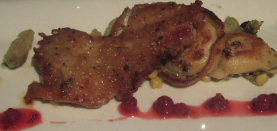
Who better a chef than George’s Lorenzo Loseto to take this to a totally new level of deliciousness? His simply named Cornish Hen, Mint Yoghurt, Potato Perogies which served as a “third” at lunch for $19 and is something that should not be missed. The very lightly breaded, ultra tender, flavourful Cornish hen and perfectly prepared perogies might be mistaken as pedestrian cuisine. Under his hand he has taken it to new gastronomical heights.
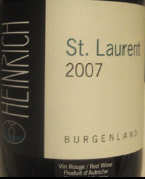
The perfect wine pairing comes from their special Austrian wine list. Let me highly recommend their 2007 St. Laurent, Gernot Heinrich, Burgenland ($11~3oz / $22~6oz / $80~btl), which is Jimson’s favourite (the restaurant’s General Manager). It is on one hand quite bright and crisp. When married with the right cuisine, however, it becomes surprisingly velvety with its black cherry core and notes of roasted herbs. St. Laurent is a close relative to Pinot Noir and this one from the ripe 2007 vintage is one of the most food friendly wines on their list.
To see the Austrian Wine List
To see the Full Wine List
To see the Luncheon Menu
To see the Dinner Menu
* * * * *
Michael Vaughan's Licensee Pick
Don't miss t his Licensee Best Buy comes from California from 25 Brix, Ontario's newest small premium California estate wine importer. I had the pleasure of tasting through the portfolio of these wines with the owner and this was the best buy of the group. Visit the 25 Brix website to see the list of wines curently available for licensees.
*** (out of three stars) - 91 Points
RECOMMENDED - BEST BUY
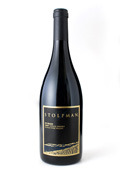
STOLPMAN 2007 ESTATE SYRAH
Santa Ynez Valley
(STOLPMAN) (167 Cases) (14.5%)
(185264 - $32.95)
Extremely deep intense purple colour. Intense, complex, slightly spicy, herb-tinged, bright black cherry purée nose with some, very faintly smoky, vanilla-licorice notes. Dry,
medium-full bodied, very well structured, slightly spicy, faintly herbal, ripe, plummy-cherry-vanilla flavours with a lingering, faintly smoky, mocha-chocolate finish. Made with the addition
of 5% Viognier - only 2,200 cases produced. Drinkability: { N S SM M ML l }
* * * * *
Gilberto Bojaca
September Update
Returning the bottle: crisis or opportunity?
Returning the bottle is probably one of the most dreaded moments for the Sommelier. I have had my share and they were rather frustrating, however I managed to turn these experiences into rewarding opportunities. At the outset, it is important to develop a response policy within your establishment and ensure that you and your co-workers are empowered to execute a solution on the spot.
What to do:
Act immediately.
Don’t delay. Consider the customer may be right; in that case the ball is in your court. Remember “customers are not always right but they are always the customers”.
Listen to the customer’s concern and don’t interrupt.
Allow the customer time to express their concern / opinion. If in your own expert opinion, you think the wine is sound, help the customer save face. Avoid trying to convince them with your theories regarding terroir, style, green pruning, or slight hints of brett. They already made up their mind. Don’t embarrass the customer; give them the opportunity to shine. If you miss manage this situation, and this is a regular customer, you will loose them, along with their guests. (Just remember how much you spend promoting your place).
Offer the wine list immediately with a possible alternative.
When possible, step it up a notch offering the customer an alternative that brings uniqueness and value. Remember, if you listen to them they will listen to you. Now you have a dialogue.
Deliver the wine promptly, professionally and graciously.
After the customer is taken care of:
See if the wine is sound or faulty
If faulty, you could send it back to the LCBO/Agent to get your money back. Alternatively, you could use it for staff training purposes, client information, faults identification.
If sound, you could sell it by the glass, use it for staff training or cooking.
In the end, you are still the winner because, bottom line, you will likely have this customer (and their guests!) for a long time to come.
* * * * *
Will Predhomme's
August 21st Update
New at Canoe – 36 Wines
Today we are continuing our series of hand's on reports by leading sommeliers from Canada's cutting edge restaurants. New contributors and wine list features are currently being added.
It’s August and, at last here at Canoe, I can take a bit of a break and work on catching up on my  ever-growing “to do” list. Our clientele is not a tourist-related, which means that many of our regular guests and suppliers are on holiday. In fact, as write this I am enjoying a cold beer on a lake in the Muskokas. Luckily I can rest easy having updated and reprinted the wine list at both Canoe and Jump restaurant last week, adding 10 new wines to Jump’s list and 36 new wines to Canoe. Here is the list of new wine additions at Canoe.
Reprinting Canoe’s list is a process - the sum of meeting with suppliers, purchasing, receiving, invoicing, binning (storing and organizing in your cellar), recording, formatting, programming, etc. Having a collection of new wine on your desk without having them listed is a source of stress, the bottles seemly staring at you, reminding that they are sitting dormant.
There are multiple avenues to sourcing and purchasing wine for a list, depending on your restaurant’s philosophy, purchasing arrangements and thematic. To that end there are multiple dynamics that exist when purchasing wine. Below are the various avenues in which I usually source the wine for my lists. I’ve weighed the pros & cons to each venue as I see them, which should give you my perspective on purchasing. My main goal is to keep our wine lists recognized and interesting.
LCBO / Vintages – The largest supplier in Ontario, ranging in quality and availability. It’s very hard to ignore. I try to avoid dealing directly with the LCBO for a few reasons. Sommelier’s, restaurateurs, chefs, all exist in a service culture & environment. Fundamentally we provide services in exchange for money. Those with the best services (food, wine, etc.) usually stay alive, while those that that do a poor job often go out of business. The LCBO lacks this perspective, due to its size and monopoly on all wine brought in. There is no shortage of quality wine available; although getting it to the restaurant has many roadblocks in place. What should be a very easy process seems to be eternally complicated. This means that about 2%-3% of Canoe’s list is available at times through the LCBO, as it is unavoidable. Naturally it’s very easy to take a stab at something as draconian as the LCBO, although from the perspective of this sommelier, the current system does not make it easy or interesting.
Consignment Wine Agencies – The most traveled avenue for the savvy sommelier. These wines are not usually available in retail stores, though occasionally pop up on the retail shelves. Agents arrange appointments with the sommelier, show wine from their portfolio and usually deliver what is ordered within 48 hours. It’s a much more reliable and service-oriented way of doing business. In addition, you have a go-to if there are issues. Keep in mind that availability is sporadic. That is the nature of the system and a good agent will tell you the quantities available and how long it’ll be around. The consignment system allows the agent to store the wine at the LCBO for a short period of time, so you may have the opportunity to stagger you purchases.
The cache is their lack of availability, as the wines offered are often interesting & somewhat exclusive. We deal with about 30 different consignment agents - a third of those agents provide the wine core to our wine list. I have a lot of respect for wine agents. You’re constantly huffing wine from place to place, battling traffic and parking, arranging your schedule around the hours most purchasers keep. Between 2-430 pm is when I arrange to see agents, no more than three agents in an afternoon. Just like the wines shown, there are a range of personalities that sell wine, from the consummate professionals to shady, unreliable agents (who’s first meeting is often their last).
There is a dynamic that exists between supplier & purchaser - the wine agent must work with the personalities and business ethics of the purchaser and vice versa. One cannot exist without the other – a point that is often forgotten by some sommeliers / purchasers. Keep in mind that we are all in the service industry. Suppliers and sommeliers should be treated with respect. If you provide exceptional service - deliver on time and prompty payment of bills, then you’ll succeed in business (at least with me).
Private Order – This avenue is used to find the most unique wines. It can take a few months or even more to arrive, although if you know the system and have a few connections, you can bring in almost anything. There may well be certain wines that you might want that are not available through the aforementioned avenues. In this instance, you can arrange to bring in these wines yourself directly through the LCBO and/or have a wine agent bring them in on your behalf. I choose to use wine agencies for this option because they usually have the know-how and relationships in place.
Unfortunately, I’ve had many orders placed by myself through the LCBO’s private ordering systems become lost and/or arrive over 8 months from the original order date. As a result, I’d rather work with an agent to bring them in. Often I’ll be fortunate to taste something truly unique – a small production item that I know will be a great benefit to the list. In such instances, if you’re patient, a private order will pay off when you receive it a few months later and discover that you are the only one to list them.
Here are few highlights that have made it to Canoe’s list on this last reprint. They are all from the private order system and I am very excited to see them on our list:
Afros 2009 Loureiro Vinho Verde (white)
(red) - Portugal
Tasted at the annual Wines of Portugal tasting in the spring, these two wines show remarkable proper attributes to the style of Vinho Verde. I was fortunate to vacation last summer in the south of Portugal, where you eat, surf and quaff Vinho Verde on the beach. The perfect summer wine; Vinho Verde, or green wine, refers to the fact the grapes are picked young and tart (i.e. green), fermented in stainless steel and bottled shortly after harvest retaining the freshness of the grape as well as a little cleansing spritz. Loureiro is one of the quality white grapes used for Vinho Verde production. It has bright citrus and vibrant mineral characteristics, plus the traditional touch of natural CO2 effervescence. Although Portugal is known for it’s white Vinho Verde, red is the most produced style, though least exported. The is quite possibly the darkest and most extracted wine I have ever seen – nothing comes close in concentration of colour. This is confusing because the wine manages to remain true to it’s premise – it’s refreshing despite it’s teeth-staining characteristics and depth of fruit. This is a remarkable and unique example of the style. Both are very affordable on Canoe’s list at $45 a bottle and 12 bottles of each were brought in for the final month of summer.
Zahel Nussberg (white)
(red) - Vienna, Austria
A third generation family-based winery outside of Vienna, Zahel is a leader in reviving the traditional practices of the region, most notably Heuriger and Gemischter Satz to the rest of the world. Their estate is under 5 hectares and has its own “Heurigen”, which is a place where the locals spend their evenings sampling the house wines and small plates of regional and family cuisine. These were the first wine bars in the world. Gemischter Satz indicates a number of different grape varieties, most indigenous to the area, growing in the same vineyard and fermented together. The Nussberg Gemischter Satz consists of nine different grape varieties from a 53-year-old vineyard. It’s a great, well-balanced, flafourful, rich white. The Antares is taken from Greek mythology, translating to “Red Giant”. It’s a blend of indigenous St. Laurent and Zweigelt as well as the international Cabernet Sauvignon and Merlot. This giant shows elegant and layers of complexity.
* * * * *
Our inaugural sommelier
William Predhomme from Canoe
Recent winner of the CAPS 2010 Best Ontario Sommelier
Where: For the past 2 ½ years Will has been the Senior Sommelier, Canoe Restaurant & Jump Café in Toronto which is part of Oliver & Bonacini Restaurants
Restaurant Profile: Critically acclaimed to be among Canada’s best restaurants, Canoe’s unique location high atop the TD Bank Tower affords a breathtaking view of the city. The design, created by the noted team of Yabu Pushelberg, is clean and simple, yet absolutely stylish—a brilliant reflection of this country’s rich raw environment. Open for lunch & dinner, Monday - Friday. Closed for private functions Saturday & Sunday
Profile: Begun studies in 2002 with the International Sommelier Guild while working for theFairmont Chateau Lake Louise, passing the diploma program in 2004. Relocated to his hometown of Windsor, Ontario where he was hired as an LCBO Product Consultant, becoming the youngest consultant in the province. In 2007 Willdeveloped the wine program for Canada's first Caesar's-brand property at Caesars Hotel & Casino in Windsor. He is currently the Senior Sommelier for Oliver & Bonacini's Canoe Restaurant & Bar & Jump Cafe, developing the vinous culture at these two restaurants. Will holds the Court of Master Sommelier's Certified Sommelier Certificate, the Wine & Spirits Education Trust Advanced Certificate and is a Certified Sommelier with the Canadian Association of Professional Sommeliers (CAPS). In 2008 he received the Ontario Hostelry Institute's Top 30 Under 30 award and recently won the 2010 Best Ontario Sommelier Competition.
August 7, 2010 Update
Sommelier Selects
By William Predhomme
An Intro to the Canoe Wine List
“We reprint the wine list every 3 to 4weeks to accommodate 20-50 new wines …”
I've had the pleasure and challenge of managing one of the country's more dynamic wine lists for nearly 3 years. Pleasurable, as working with 450-550 labels ranging from the casual quaffer to the iconic blockbuster, liaising with a variety of wine agents & guests, training & maintaining a culture that demands as much from itself as the public's perception will keep you pretty sharp. Working with seasonal cuisine & an inspired kitchen offers wonderful opportunities for exploring the pleasures of food & wine pairing, ensuring we are popping corks all the time to ensure we're on the right track.
A challenge though, as Canoe's wine list & culture is known within the restaurant & wine community as a beast to be tamed. To say that Canoe is a consistently busy restaurant is an understatement. Our staff is passionate & well-trained and our guests savvy & knowledgeable. And everyone is thirsty. The cellar is legendarily small for the volume of wine we annually open in the restaurant. The reason is that real estate on the 54th floor of the Toronto Dominion tower comes at a premium and is best used for seats than storage. Keeping with the Canadiana thematic, approximately 25% of our list is quality Canadian content, the remaining 75% artisan & esoteric international selections brought into the province through consignment programs usually in small lots. Combine a small cellar, high demand, & tiny parcel purchases of small production wine…. you get the point.
Having a regular turn over of wine presents some wonderful opportunities though. The list is dynamic and always changing. If you time it right, you can mimic the seasonal changes in not only the cuisine presented, but also the preference of the guest. We reprint the wine list every 3 to 4 weeks to accommodate 20-50 wines that have run through the list and about the same number of wines coming in. A lot of work no doubt, but what amazing opportunities to evolve with the list.
Take August - the dog days of summer. We've long since slowed the purchasing the big, hedonistic wines enjoyed during the colder, daylight-lacking days of winter. Refreshing Riesling & Sauvignon Blanc, elegant Pinot Noir, with the occasional dry Rose is what our guests are currently enjoying and I suspect will continue to drink for the remainder of August.
Keeping an eye on the future though, I'm starting to sit with our wine agents to discuss fuller body styles for our glass & bottle selection for the fall. Downtown Toronto after Labour Day, the restaurant landscape changes from the casual khaki's & Hawaiian shirts to pressed suits & a sense of urgency. Summer is over, it's time to get down to business, & our guests are looking for wine that is equally as serious.
We see the crisp whites decline, rose vanish & the big bottles start to come out. Cult California Cabernets start to make a more regular appearance, the corks of alluring Italian; Piemontese & Tuscan estates are now frequently being pulled. Wines of this pedigree are not brought in quantity to the province & are often spoken for before they hit any consignment warehouse. Maybe 2% of our list is available at the LCBO; it's much more fun to present wine to our guests that is difficult to find. So you've got to be the early bird. I'm meeting with a number of reliable suppliers of fine wine for the remainder of the month, plotting my fall wine selection. Tune in to the next issue for a recap of these meetings.
At present we have 21 wines by the glass, including the silver medal winning JoieFarm 2009 Rose from the Okanagan Valley, which sells for $14 for a 6 oz glass and $70 a bottle. It rated 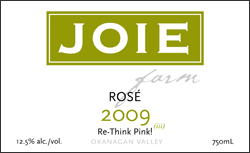 90-92 points by BC wine writer John Schreiner – April 28, 2010. Here is what he had to say: In this vintage, the winery released 2,378 cases of rosé, a remarkably large production considering that rosé has only come back into fashion a few years ago. In 2004, the winery released just 140 cases of rosé. JoieFarm has been so successful with this wine that it is now its second largest label. This is a blend of Pinot Noir (42%), Gamay (33%), Pinot Meunier (15%) and Pinot Gris (10%). The wine begins with a vibrant rose hue (pomegranate, according to the winery) and an aroma of strawberries and raspberries. On the palate, there are more flavours of strawberries and raspberries, as well as a touch of grapefruit and nectarine. The finish is crisp and refreshing.
Famous on the West Coast, JoieFarm is unheard of Ontario. Owners Michael & Heidi Noble have a fantastic story to tell. Michael, a well established sommelier in Vancouver & his wife Heidi, a Stratford Chef School grad on a whim purchase a 5 hectare plot in the Okanagan's Naramata Bench - the exact spot that forever changed my perspective on BC & it's wine. They've worked hard for nearly a decade in creating one of BC's most exciting, innovative, & unpretentious wineries. The passion, intelligence, & integrity they brought to their former careers clearly translates to the wine they produce; which is almost entirely consumed by a thirsty local market.
A focus on clean & vibrant whites, a Loire-inspired rose, & a one red - a humble & tasty
passe-tout-grains are produced in tiny quantities. Here come's the perpetual issue; very little is brought into Ontario, hence this fantastic winery isn't on any radar in the East. Lifford Wine Agencies brings two of their wines in. The Rose which has been a glass pour on Canoe's list for quite some time as well as a "Noble Blend", a take on the everyday Alsacian aromatic white.
As long as Joie Farm continues to produce wine of this calibre (& hopefully supply Ontario) this sommelier will proudly pour them.
To see the Canoe wine list click here
Be sure to check out William Predhomme's updates to this inaugural page. You will see our wineflag once they are posted. You can contact Will via Twitter: @SommWillPred
© Copyright Vintage Assessments 2011
Prior written permission is required for any form of reproduction
(electronic or otherwise) and/or quotation.
To see previous reports click here to go to our Sommelier Selects archives.
Contact Michael Vaughan at mbv@total.net