| |||||
| |||||




An Introduction to the Editor & Sommelier Selects
 Gilberto J. Bojaca, wine educator and certified sommelier, is well recognized in the hospitalityand wine service industry. He was co-founder and past president of CAPS (CanadianAssociation of Professional Sommeliers) and a member of the Society of Wine Educators. He was also founding member & past president of Sommelier Guild of Canada. . He is now spearheading Sommeliers Selects with the assistance of the publisher Michael Vaughan. To see Gilberto's background. To contact Gilberto: gilberto@sommelierselects.com

Gilberto Bojaca
September 4 th Update
Returning the bottle: crisis or opportunity?
Returning the bottle is probably one of the most dreaded moments for the Sommelier. I have had my share and they were rather frustrating, however I managed to turn these experiences into rewarding opportunities. At the outset, it is important to develop a response policy within your establishment and ensure that you and your co-workers are empowered to execute a solution on the spot.
What to do:
Act immediately.
Don’t delay. Consider the customer may be right; in that case the ball is in your court. Remember “customers are not always right but they are always the customers”.
Listen to the customer’s concern and don’t interrupt.
Allow the customer time to express their concern / opinion. If in your own expert opinion, you think the wine is sound, help the customer save face. Avoid trying to convince them with your theories regarding terroir, style, green pruning, or slight hints of brett. They already made up their mind. Don’t embarrass the customer; give them the opportunity to shine. If you miss manage this situation, and this is a regular customer, you will loose them, along with their guests. (Just remember how much you spend promoting your place).
Offer the wine list immediately with a possible alternative.
When possible, step it up a notch offering the customer an alternative that brings uniqueness and value. Remember, if you listen to them they will listen to you. Now you have a dialogue.
Deliver the wine promptly, professionally and graciously.
After the customer is taken care of:
See if the wine is sound or faulty
If faulty, you could send it back to the LCBO/Agent to get your money back. Alternatively, you could use it for staff training purposes, client information, faults identification.
If sound, you could sell it by the glass, use it for staff training or cooking.
In the end, you are still the winner because, bottom line, you will likely have this customer (and their guests!) for a long time to come.
* * * * *
Will Predhomme's
August 21st Update
New at Canoe – 36 Wines
Today we are continuing our series of hand's on reports by leading sommeliers from Canada's cutting edge restaurants. New contributors and wine list features are currently being added.
It’s August and, at last here at Canoe, I can take a bit of a break and work on catching up on my  ever-growing “to do” list. Our clientele is not a tourist-related, which means that many of our regular guests and suppliers are on holiday. In fact, as write this I am enjoying a cold beer on a lake in the Muskokas. Luckily I can rest easy having updated and reprinted the wine list at both Canoe and Jump restaurant last week, adding 10 new wines to Jump’s list and 36 new wines to Canoe. Here is the list of new wine additions at Canoe.
Reprinting Canoe’s list is a process - the sum of meeting with suppliers, purchasing, receiving, invoicing, binning (storing and organizing in your cellar), recording, formatting, programming, etc. Having a collection of new wine on your desk without having them listed is a source of stress, the bottles seemly staring at you, reminding that they are sitting dormant.
There are multiple avenues to sourcing and purchasing wine for a list, depending on your restaurant’s philosophy, purchasing arrangements and thematic. To that end there are multiple dynamics that exist when purchasing wine. Below are the various avenues in which I usually source the wine for my lists. I’ve weighed the pros & cons to each venue as I see them, which should give you my perspective on purchasing. My main goal is to keep our wine lists recognized and interesting.
LCBO / Vintages – The largest supplier in Ontario, ranging in quality and availability. It’s very hard to ignore. I try to avoid dealing directly with the LCBO for a few reasons. Sommelier’s, restaurateurs, chefs, all exist in a service culture & environment. Fundamentally we provide services in exchange for money. Those with the best services (food, wine, etc.) usually stay alive, while those that that do a poor job often go out of business. The LCBO lacks this perspective, due to its size and monopoly on all wine brought in. There is no shortage of quality wine available; although getting it to the restaurant has many roadblocks in place. What should be a very easy process seems to be eternally complicated. This means that about 2%-3% of Canoe’s list is available at times through the LCBO, as it is unavoidable. Naturally it’s very easy to take a stab at something as draconian as the LCBO, although from the perspective of this sommelier, the current system does not make it easy or interesting.
Consignment Wine Agencies – The most traveled avenue for the savvy sommelier. These wines are not usually available in retail stores, though occasionally pop up on the retail shelves. Agents arrange appointments with the sommelier, show wine from their portfolio and usually deliver what is ordered within 48 hours. It’s a much more reliable and service-oriented way of doing business. In addition, you have a go-to if there are issues. Keep in mind that availability is sporadic. That is the nature of the system and a good agent will tell you the quantities available and how long it’ll be around. The consignment system allows the agent to store the wine at the LCBO for a short period of time, so you may have the opportunity to stagger you purchases.
The cache is their lack of availability, as the wines offered are often interesting & somewhat exclusive. We deal with about 30 different consignment agents - a third of those agents provide the wine core to our wine list. I have a lot of respect for wine agents. You’re constantly huffing wine from place to place, battling traffic and parking, arranging your schedule around the hours most purchasers keep. Between 2-430 pm is when I arrange to see agents, no more than three agents in an afternoon. Just like the wines shown, there are a range of personalities that sell wine, from the consummate professionals to shady, unreliable agents (who’s first meeting is often their last).
There is a dynamic that exists between supplier & purchaser - the wine agent must work with the personalities and business ethics of the purchaser and vice versa. One cannot exist without the other – a point that is often forgotten by some sommeliers / purchasers. Keep in mind that we are all in the service industry. Suppliers and sommeliers should be treated with respect. If you provide exceptional service - deliver on time and prompty payment of bills, then you’ll succeed in business (at least with me).
Private Order – This avenue is used to find the most unique wines. It can take a few months or even more to arrive, although if you know the system and have a few connections, you can bring in almost anything. There may well be certain wines that you might want that are not available through the aforementioned avenues. In this instance, you can arrange to bring in these wines yourself directly through the LCBO and/or have a wine agent bring them in on your behalf. I choose to use wine agencies for this option because they usually have the know-how and relationships in place.
Unfortunately, I’ve had many orders placed by myself through the LCBO’s private ordering systems become lost and/or arrive over 8 months from the original order date. As a result, I’d rather work with an agent to bring them in. Often I’ll be fortunate to taste something truly unique – a small production item that I know will be a great benefit to the list. In such instances, if you’re patient, a private order will pay off when you receive it a few months later and discover that you are the only one to list them.
Here are few highlights that have made it to Canoe’s list on this last reprint. They are all from the private order system and I am very excited to see them on our list:
Afros 2009 Loureiro Vinho Verde (white)
(red) - Portugal
Tasted at the annual Wines of Portugal tasting in the spring, these two wines show remarkable proper attributes to the style of Vinho Verde. I was fortunate to vacation last summer in the south of Portugal, where you eat, surf and quaff Vinho Verde on the beach. The perfect summer wine; Vinho Verde, or green wine, refers to the fact the grapes are picked young and tart (i.e. green), fermented in stainless steel and bottled shortly after harvest retaining the freshness of the grape as well as a little cleansing spritz. Loureiro is one of the quality white grapes used for Vinho Verde production. It has bright citrus and vibrant mineral characteristics, plus the traditional touch of natural CO2 effervescence. Although Portugal is known for it’s white Vinho Verde, red is the most produced style, though least exported. The is quite possibly the darkest and most extracted wine I have ever seen – nothing comes close in concentration of colour. This is confusing because the wine manages to remain true to it’s premise – it’s refreshing despite it’s teeth-staining characteristics and depth of fruit. This is a remarkable and unique example of the style. Both are very affordable on Canoe’s list at $45 a bottle and 12 bottles of each were brought in for the final month of summer.
Zahel Nussberg (white)
(red) - Vienna, Austria
A third generation family-based winery outside of Vienna, Zahel is a leader in reviving the traditional practices of the region, most notably Heuriger and Gemischter Satz to the rest of the world. Their estate is under 5 hectares and has its own “Heurigen”, which is a place where the locals spend their evenings sampling the house wines and small plates of regional and family cuisine. These were the first wine bars in the world. Gemischter Satz indicates a number of different grape varieties, most indigenous to the area, growing in the same vineyard and fermented together. The Nussberg Gemischter Satz consists of nine different grape varieties from a 53-year-old vineyard. It’s a great, well-balanced, flafourful, rich white. The Antares is taken from Greek mythology, translating to “Red Giant”. It’s a blend of indigenous St. Laurent and Zweigelt as well as the international Cabernet Sauvignon and Merlot. This giant shows elegant and layers of complexity.
* * * * *
Our inaugural sommelier
William Predhomme from Canoe
Recent winner of the CAPS 2010 Best Ontario Sommelier
Where: For the past 2 ½ years Will has been the Senior Sommelier, Canoe Restaurant & Jump Café in Toronto which is part of Oliver & Bonacini Restaurants
Restaurant Profile: Critically acclaimed to be among Canada’s best restaurants, Canoe’s unique location high atop the TD Bank Tower affords a breathtaking view of the city. The design, created by the noted team of Yabu Pushelberg, is clean and simple, yet absolutely stylish—a brilliant reflection of this country’s rich raw environment. Open for lunch & dinner, Monday - Friday. Closed for private functions Saturday & Sunday
Profile: Begun studies in 2002 with the International Sommelier Guild while working for theFairmont Chateau Lake Louise, passing the diploma program in 2004. Relocated to his hometown of Windsor, Ontario where he was hired as an LCBO Product Consultant, becoming the youngest consultant in the province. In 2007 Willdeveloped the wine program for Canada's first Caesar's-brand property at Caesars Hotel & Casino in Windsor. He is currently the Senior Sommelier for Oliver & Bonacini's Canoe Restaurant & Bar & Jump Cafe, developing the vinous culture at these two restaurants. Will holds the Court of Master Sommelier's Certified Sommelier Certificate, the Wine & Spirits Education Trust Advanced Certificate and is a Certified Sommelier with the Canadian Association of Professional Sommeliers (CAPS). In 2008 he received the Ontario Hostelry Institute's Top 30 Under 30 award and recently won the 2010 Best Ontario Sommelier Competition.
August 7, 2010 Update
Sommelier Selects
By William Predhomme
An Intro to the Canoe Wine List
“We reprint the wine list every 3 to 4weeks to accommodate 20-50 new wines …”
I've had the pleasure and challenge of managing one of the country's more dynamic wine lists for nearly 3 years. Pleasurable, as working with 450-550 labels ranging from the casual quaffer to the iconic blockbuster, liaising with a variety of wine agents & guests, training & maintaining a culture that demands as much from itself as the public's perception will keep you pretty sharp. Working with seasonal cuisine & an inspired kitchen offers wonderful opportunities for exploring the pleasures of food & wine pairing, ensuring we are popping corks all the time to ensure we're on the right track.
A challenge though, as Canoe's wine list & culture is known within the restaurant & wine community as a beast to be tamed. To say that Canoe is a consistently busy restaurant is an understatement. Our staff is passionate & well-trained and our guests savvy & knowledgeable. And everyone is thirsty. The cellar is legendarily small for the volume of wine we annually open in the restaurant. The reason is that real estate on the 54th floor of the Toronto Dominion tower comes at a premium and is best used for seats than storage. Keeping with the Canadiana thematic, approximately 25% of our list is quality Canadian content, the remaining 75% artisan & esoteric international selections brought into the province through consignment programs usually in small lots. Combine a small cellar, high demand, & tiny parcel purchases of small production wine…. you get the point.
Having a regular turn over of wine presents some wonderful opportunities though. The list is dynamic and always changing. If you time it right, you can mimic the seasonal changes in not only the cuisine presented, but also the preference of the guest. We reprint the wine list every 3 to 4 weeks to accommodate 20-50 wines that have run through the list and about the same number of wines coming in. A lot of work no doubt, but what amazing opportunities to evolve with the list.
Take August - the dog days of summer. We've long since slowed the purchasing the big, hedonistic wines enjoyed during the colder, daylight-lacking days of winter. Refreshing Riesling & Sauvignon Blanc, elegant Pinot Noir, with the occasional dry Rose is what our guests are currently enjoying and I suspect will continue to drink for the remainder of August.
Keeping an eye on the future though, I'm starting to sit with our wine agents to discuss fuller body styles for our glass & bottle selection for the fall. Downtown Toronto after Labour Day, the restaurant landscape changes from the casual khaki's & Hawaiian shirts to pressed suits & a sense of urgency. Summer is over, it's time to get down to business, & our guests are looking for wine that is equally as serious.
We see the crisp whites decline, rose vanish & the big bottles start to come out. Cult California Cabernets start to make a more regular appearance, the corks of alluring Italian; Piemontese & Tuscan estates are now frequently being pulled. Wines of this pedigree are not brought in quantity to the province & are often spoken for before they hit any consignment warehouse. Maybe 2% of our list is available at the LCBO; it's much more fun to present wine to our guests that is difficult to find. So you've got to be the early bird. I'm meeting with a number of reliable suppliers of fine wine for the remainder of the month, plotting my fall wine selection. Tune in to the next issue for a recap of these meetings.
At present we have 21 wines by the glass, including the silver medal winning JoieFarm 2009 Rose from the Okanagan Valley, which sells for $14 for a 6 oz glass and $70 a bottle. It rated 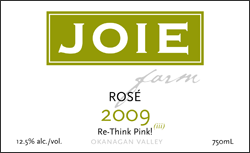 90-92 points by BC wine writer John Schreiner – April 28, 2010. Here is what he had to say: In this vintage, the winery released 2,378 cases of rosé, a remarkably large production considering that rosé has only come back into fashion a few years ago. In 2004, the winery released just 140 cases of rosé. JoieFarm has been so successful with this wine that it is now its second largest label. This is a blend of Pinot Noir (42%), Gamay (33%), Pinot Meunier (15%) and Pinot Gris (10%). The wine begins with a vibrant rose hue (pomegranate, according to the winery) and an aroma of strawberries and raspberries. On the palate, there are more flavours of strawberries and raspberries, as well as a touch of grapefruit and nectarine. The finish is crisp and refreshing.
Famous on the West Coast, JoieFarm is unheard of Ontario. Owners Michael & Heidi Noble have a fantastic story to tell. Michael, a well established sommelier in Vancouver & his wife Heidi, a Stratford Chef School grad on a whim purchase a 5 hectare plot in the Okanagan's Naramata Bench - the exact spot that forever changed my perspective on BC & it's wine. They've worked hard for nearly a decade in creating one of BC's most exciting, innovative, & unpretentious wineries. The passion, intelligence, & integrity they brought to their former careers clearly translates to the wine they produce; which is almost entirely consumed by a thirsty local market.
A focus on clean & vibrant whites, a Loire-inspired rose, & a one red - a humble & tasty
passe-tout-grains are produced in tiny quantities. Here come's the perpetual issue; very little is brought into Ontario, hence this fantastic winery isn't on any radar in the East. Lifford Wine Agencies brings two of their wines in. The Rose which has been a glass pour on Canoe's list for quite some time as well as a "Noble Blend", a take on the everyday Alsacian aromatic white.
As long as Joie Farm continues to produce wine of this calibre (& hopefully supply Ontario) this sommelier will proudly pour them.
To see the Canoe wine list click here
Be sure to check out William Predhomme's updates to this inaugural page. You will see our wineflag once they are posted. You can contact Will via Twitter: @SommWillPred
* * *
Licensee Pick
August 7 Vintages Release
Today's Licensee Best Buy comes from California from 25 Brix, Ontario's newest small premium California estate wine importer. I had the pleasure of tasting through the portfolio of these wines with the owner and this was the best buy of the group. Visit the 25 Brix website to see the list of wines curently available for licensees.
*** (out of three stars) - 91 Points
RECOMMENDED - BEST BUY
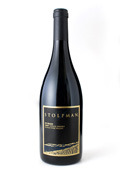
STOLPMAN 2007 ESTATE SYRAH 2007
Santa Ynez Valley
(STOLPMAN) (167 Cases) (14.5%)
(185264 - $32.95)
Extremely deep intense purple colour. Intense, complex, slightly spicy, herb-tinged, bright black cherry purée nose with some, very faintly smoky, vanilla-licorice notes. Dry,
medium-full bodied, very well structured, slightly spicy, faintly herbal, ripe, plummy-cherry-vanilla flavours with a lingering, faintly smoky, mocha-chocolate finish. Made with the addition
of 5% Viognier - only 2,200 cases produced. Drinkability: { N S SM M ML l } MV
© Copyright Vintage Assessments 2010
Prior written permission is required for any form of reproduction
(electronic or otherwise) and/or quotation.
To see previous reports click here to go to our Sommelier Selects archives.
Contact Michael Vaughan at mbv@total.net